Cuban Cuisine: A Guide to Cuban Food, Drinks, and Sandwiches
What Is Cuban Cuisine?
Cuban cuisine is the food of Cuba and Cubans the world over: a Caribbean cooking tradition built on Indigenous Taíno ingredients and techniques, Spanish technique brought by colonization, and African contributions from the enslaved population — layered over the produce of an island that grows pork, plantains, rice, beans, citrus, and tropical fruit in abundance. This mixture produced, in the Caribbean, one of the culinary world’s great inheritances, and one that continued to be shaped by its people’s diaspora influences in places like Little Havana.
Three things distinguish Cuban food from the broader Caribbean and Latin American catalog. The first is the centrality of pork: Cuban kitchens cook more cuts of pig than most non-Cubans realize. The second is the rice and beans pairing that runs as the default side under almost every protein: white rice with black beans (moros y cristianos when cooked together), or red beans with rice, or congrí. The third is the fruit and citrus integration: lime, sour orange, guava, pineapple, mango, and coconut show up in marinades, sauces, drinks, and desserts in ways that distinguish Cuban food from, say, the closer-to-Spain traditions of Latin America or the spicier Caribbean cooking of Jamaica and the Dominican Republic.
Cuban food is not, generally, spicy. It’s savory, layered, slow-cooked, and citrus-bright. The heat in a Cuban kitchen comes from the long braise and the hot oil, not from chili peppers.
In the United States, Cuban cuisine is most concentrated in Miami, and within Miami, it is most concentrated in Little Havana, along Calle Ocho, the stretch of Southwest 8th Street where Cuban exiles built a new version of what they’d left behind starting in the early 1960s. The version of Cuban food you’ll find on Calle Ocho today is the canonical Cuban tradition with sixty years of Miami specifics that evolved from it.
The Pillars: Signature Cuban Dishes
If you’ve never eaten Cuban food, these are the dishes that define it. Every Cuban restaurant worth visiting will run at least most of them, and how a kitchen handles these is the test of whether it’s a serious Cuban kitchen or a place that ‘has Cuban food on the menu.’
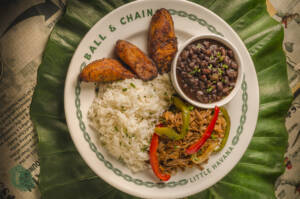 Ropa Vieja
Ropa vieja translates literally as “old clothes,” a reference to how the finished dish looks: long, frayed strands of shredded beef that pull apart the way worn fabric does. The traditional preparation starts with flank steak, slow-braised for hours in a sauce of tomato, sofrito, white wine, bell peppers, garlic, and bay leaf until the meat is tender enough to pull into strands with two forks. It’s served over white rice with black beans on the side, and it’s the closest thing Cuban cuisine has to a national dish. Variations exist across the Spanish-speaking Caribbean (the Canary Islands have a version, the Dominican Republic has one), but the Cuban iteration with ithttps://ballandchainmiami.com/wp-admin/post.php?post=32067&action=edit#s specific sofrito base is the one most Americans encounter under this name.
At Ball & Chain: Ropa vieja runs the canonical preparation, cuban-style shredded beef slow-marinated in a signature tomato sauce with bell peppers and onions. Available in medium and large. See the menu.
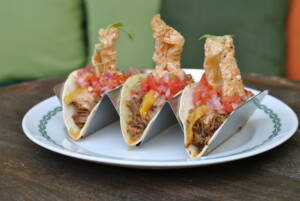 Lechon (Roast Pork)
Lechon is the centerpiece of Cuban celebration cooking: a whole pig or pork shoulder marinated in mojo (sour orange, garlic, oregano, cumin, salt) and slow-roasted until the skin crisps and the meat shreds. In Cuba, lechon is the food of Christmas Eve, the food of weddings, the food of family Sundays. It’s also one of the most-imitated Cuban dishes outside the island, and the difference between a serious lechon and a tourist version is the marinade time: twenty-four hours minimum, in the right preparation. The mojo penetrates the meat. The crackling skin is non-negotiable.
At Ball & Chain: The pork on the menu most directly inheriting the lechon tradition is the Lechon Tacos: citrus mojo-marinated pork served three to an order with grilled pineapple, chipotle aioli, pico de Gallo, crispy pork rinds, and micro cilantro. The same mojo marinade tradition, in a Calle Ocho format.
Masitas de Puerco
Masitas de puerco are bite-sized chunks of pork shoulder, marinated in mojo and fried until the outside crisps. The name translates roughly as “little pork bits,” and that’s exactly what they are: cubes of meat with a crackling exterior and a tender, citrus-marinated interior, served with mojo or sour orange on the side and a sprinkle of raw onion over the top. Masitas are the casual, weeknight Cuban dish that most home cooks make more often than they make full lechon. The technique is the same (mojo marinade), but compressed.
At Ball & Chain: Masitas de puerco are the traditional preparation: tender pork chunks marinated in citrus and garlic, slow-cooked and crisped, served with traditional accompaniments.
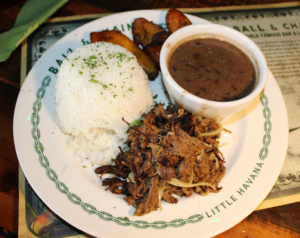 Vaca Frita
Vaca frita translates as “fried cow.” It starts with flank steak or skirt steak, boiled until tender, then shredded by hand, then pan-fried hard on a flat-top with garlic, lime juice, and sometimes onion until the edges of the shredded beef crisp and caramelize. The result is deeply flavored, with the crispy edge that ropa vieja’s slow-braise doesn’t produce. Where ropa vieja is soft and tomato-saucy, vaca frita is dry-crisp and intensely savory. Both start with shredded beef and they’re easy to confuse if you only ever eat one. They’re genuinely different dishes.
At Ball & Chain: Vaca frita is mojo-lime marinated shredded skirt steak, pan-fried, topped with sautéed onion and fresh lime wedges. Available in medium (serves 3) or large (serves 5). The contrast with the ropa vieja on the same menu is the point: same starting ingredient, completely different finished dish.
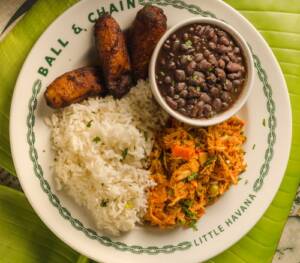 Pollo a la Fricasé (Chicken Fricasee)
Pollo a la fricasé is the Cuban chicken stew: bone-in chicken pieces braised in a sauce of sofrito, white wine, tomato, potatoes, olives, raisins, and capers. The dish came to Cuba through French and Spanish influence and was domesticated into something specifically Cuban over generations. The raisins and olives in particular are a Cuban touch that distinguishes the dish from its French ancestor. It’s a weeknight dish in Cuban kitchens and a Sunday dish in others, served over white rice with a side of black beans or maduros.
At Ball & Chain: Chicken Fricasee is garlic-citrus mojo-marinated chicken, shredded and tossed in a white wine tomato broth with potatoes and carrots. A lighter take on the canonical version (which traditionally runs olives and raisins), brothy and layered, less dense than ropa vieja or masitas.
Cuban Sandwiches: Cubano vs. Medianoche
The Cuban sandwich is the single most argued-over item in Cuban cuisine. Every Cuban-American city, Miami and Tampa and New York, has a claim on the canonical version, and every Cuban restaurant has an opinion. What the canonical sandwich is, however, is straightforward.
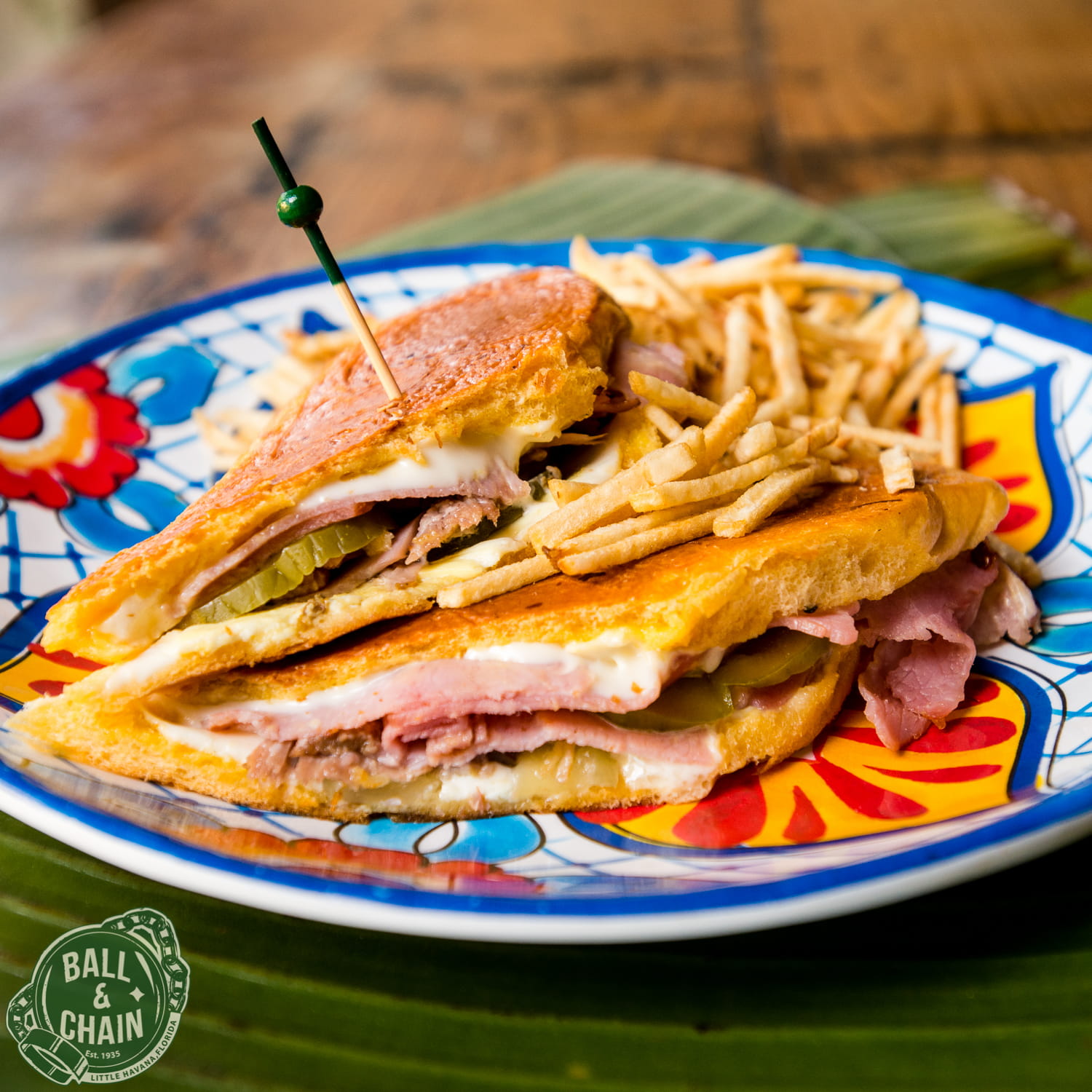
The Cubano (Cuban Sandwich)
The Cuban sandwich, or Cubano, is built on Cuban bread: a long, soft loaf with a thin, crisp crust, lighter and airier than a French baguette. Inside: roast pork (lechon), sliced ham, Swiss cheese, dill pickles, and yellow mustard. The whole thing gets pressed flat on a plancha until the bread crisps on the outside and the cheese melts. No lettuce, no tomato, no mayonnaise, no salami. Those are tourist additions that purists will tell you ruin the sandwich.
The origin is contested. The Tampa version, made by Cuban cigar workers in Ybor City in the late 19th and early 20th centuries, includes Genoa salami: a nod to the Italian immigrants who worked alongside the Cubans. The Miami version, which spread in the second half of the 20th century with Cuban exiles, omits the salami. Both communities will tell you their version is the real one. The honest answer is that both are real; they’re just different regional traditions of the same dish.
Ball & Chain’s Sandwich Cubano runs the Miami preparation: ham, mojo pork, Swiss cheese, pickles, and mustard aioli, pressed on pan Cuban. No salami.
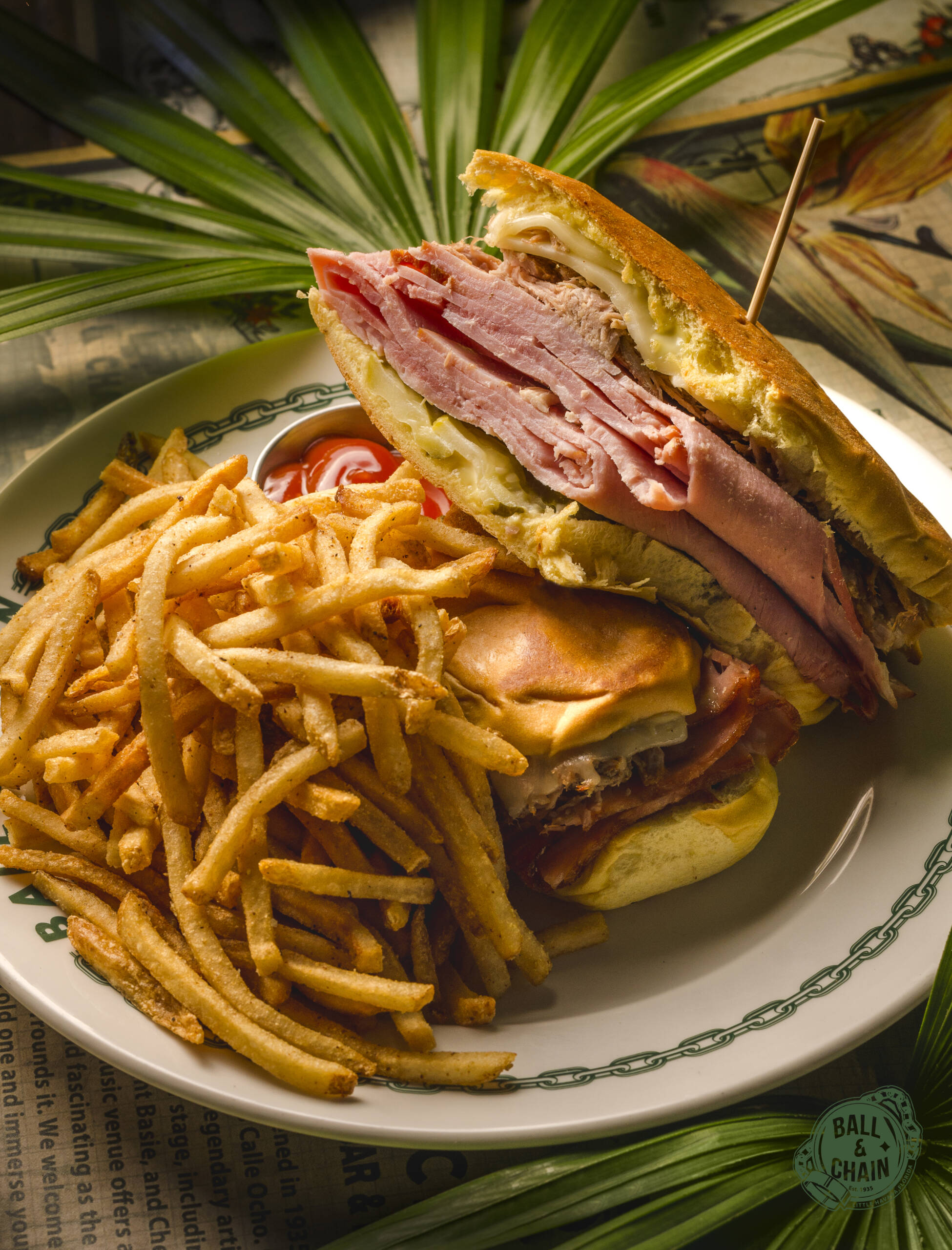
The Medianoche
The medianoche (Spanish for “midnight”) is the Cuban sandwich’s softer, sweeter sibling. Same fillings (roast pork, ham, Swiss cheese, pickles, mustard), but built on a different bread: medianoche bread, which is an egg-and-sugar enriched roll, smaller and sweeter than the standard Cuban loaf, with a yellow-tinted crumb. The name comes from its traditional role as a late-night sandwich, eaten after the theater or a late shift, when the simpler Cuban sandwich would be too heavy and the egg-bread version went down easier.
The two sandwiches are distinct dishes despite using nearly identical fillings. The bread is the whole story. A Cubano on medianoche bread is a medianoche, not a Cubano. A medianoche on Cuban bread is a Cubano, not a medianoche.
Ball & Chain’s Medianoche Sandwich Ball & Chain’s Medianoche Sandwich runs ham, mojo pork, Swiss cheese, pickles, and mustard aioli on pan suave (a softer bread than the standard Cuban loaf), served with papas fritas.
Medianoche vs. Cubano: The Short Version
If you can only remember one thing: the Cubano is pressed on plain Cuban bread (crisp, neutral crust); the medianoche is pressed on egg-enriched medianoche bread (softer, sweeter, yellower). Same fillings. Different bread. Different sandwich.
The Drinks: Cuba in a Glass
Cuban cocktails are a defined category. The country that invented the daiquiri and globalized the mojito has earned the right to its own drinks shelf, and any serious Cuban menu will run a cocktail program that’s as deliberate as the food.
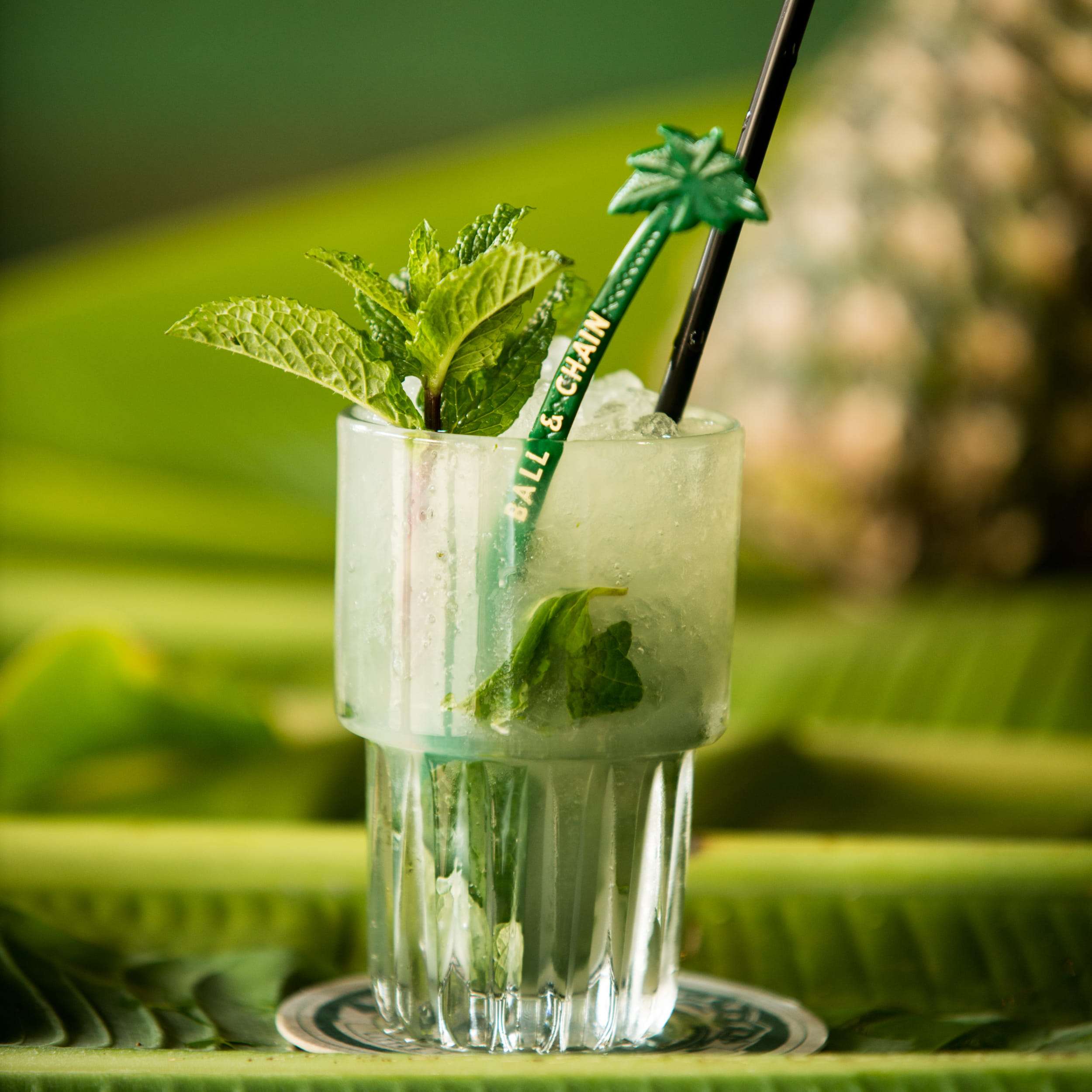
The Mojito
The mojito is Cuba’s signature cocktail. White rum, fresh lime juice, sugar (or simple syrup), fresh mint, and soda water, served over ice in a tall glass. The mint is muddled (bruised lightly, not pulverized) to release the oil without making the drink bitter. The mojito originated in Cuba in some form dating back to the 16th century, evolved through the 19th and early 20th, and globalized in the second half of the 20th century to the point where you can order one in a hotel bar in any city on earth. The Cuban version is the original and remains the reference. A good mojito tastes of mint, lime, and rum in roughly equal measure, balanced by the sugar and lengthened by the soda. A bad mojito tastes of sugar.
At Ball & Chain:
Mojitos are the house specialty at Ball & Chain. The menu’s World Famous Ball & Chain Mojito has been the house version for ninety years, and ninety years of pouring them in Little Havana has earned the name.
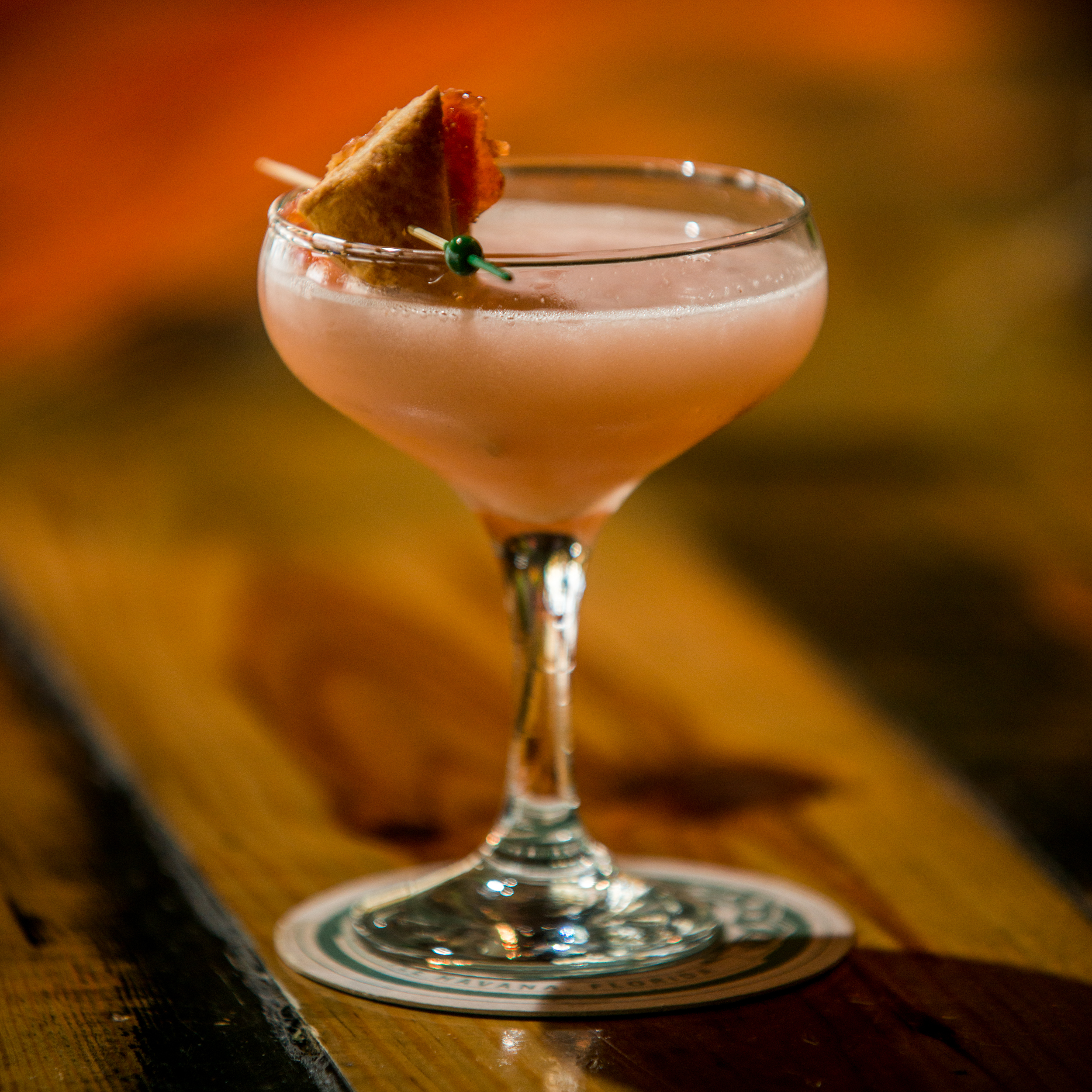
The Daiquiri
The original daiquiri is a Cuban drink, invented in the town of Daiquirí near Santiago de Cuba in the late 1890s. The canonical recipe is simple: white rum, fresh lime juice, sugar, shaken with ice, strained into a coupe. No blender. No strawberry. No frozen slush. The frozen-blended daiquiri that dominates American beach bars is a different drink with the same name, popularized in the U.S. in the second half of the 20th century. The Cuban original is closer in spirit to a margarita: three ingredients, balanced acid-and-sugar, served cold but not slushy. Ernest Hemingway drank these at El Floridita in Havana in the 1930s and 40s, and the bar still makes them his way (more rum, less sugar, a touch of maraschino).
At Ball & Chain:
Ball & Chain runs two house daiquiri variants. The Pastelito Daiquiri runs Bacardi rum, guava puree, house-made honey syrup, and lime juice, garnished with a pastelito — the canonical guava daiquiri base, dressed up with the pastry the cocktail is named after. The Bananita Daiquiri runs Bacardi rum, créme de banana, fresh lime juice, simple syrup, coffee beans, and bananita.

The Cuba Libre
The Cuba Libre is rum, Coca-Cola, and lime, a drink that emerged in Cuba in the early 20th century, after Coca-Cola arrived in Havana following the Spanish-American War. The name (“Free Cuba”) refers to the Cuban independence movement of that era. As a drink, it’s three ingredients and dead simple: white or dark rum, fresh lime juice, Coke, served over ice in a highball glass. The cocktail’s reputation has suffered from being treated as a default order (a rum and Coke with a lime wedge added at the bar), but the canonical preparation, with proper fresh lime and good rum, is a more refined drink than its reputation suggests.
At Ball & Chain:
The Cuba Libre runs on the bar menu in its canonical form. A bedrock classic, you won’t find it on the specialty cocktail menu the same way you won’t find a gin and tonic there–but our bartenders are happy to make it to order.
Café Cubano (and the Cortadito and Colada)
Café Cubano is the Cuban espresso tradition: a shot of dark-roast espresso pulled through fine-ground sugar, which produces a layer of caramelized foam on top called espuma. The result is sweeter, denser, and more aromatic than a standard espresso. The cortadito is café Cubano cut with a small amount of steamed milk: Cuba’s answer to a macchiato. The colada is the social version: a large café Cubano served with small disposable cups so a group can share. Every Cuban kitchen in Miami runs all three, and the ventanitas (window counters) along Calle Ocho serve them all day to anyone who walks up.
At Ball & Chain (as shown):
The bar’s Cafecito Bourbon braids cold-brew coffee into a stirred whiskey cocktail: Maker’s Mark bourbon, Demerara syrup, salt, cold brew coffee, and orange peel. A Calle Ocho take on the coffee-cocktail format.
Accompaniments: Rice, Beans, and Plantain
Cuban food is built around three carbohydrate accompaniments that show up under almost every plate. Knowing the difference between them is part of knowing Cuban food.
Rice and Beans
White rice with black beans on the side is the default Cuban pairing. The black beans (frijoles negros) are simmered low with sofrito, garlic, bay leaf, and a splash of vinegar at the end, served as a soupier preparation that you can spoon over the rice or eat alongside it. Moros y cristianos (“Moors and Christians”) is rice and black beans cooked together in one pot, named for the visual contrast and the historical Iberian context. Congrí is the Eastern Cuban version with red beans instead of black, also cooked together with the rice. All three are common; they’re not interchangeable.
Plantain: Maduros vs. Tostones
Plantains are the second pillar. Two preparations dominate Cuban kitchens. Maduros (sweet plantains) are made from ripe, yellow-black plantains, sliced and pan-fried until they caramelize: sweet, soft, golden. Tostones are made from green, unripe plantains, cut into thick rounds, fried, smashed flat, and fried again until crisp: savory, crunchy, almost like a starchy chip. Mariquitas are the chip-thin variation: green plantain sliced paper-thin and deep-fried like potato chips, often served as a snack or alongside cocktails.
Yuca and Boniato
Yuca (cassava) is a Cuban kitchen staple: boiled and dressed with mojo, it’s a side dish that appears under roast meats. Boniato is a starchier, drier sweet potato used in stews and side preparations. Neither is on every Cuban menu, but a serious Cuban kitchen will have at least one of them.
Cuban Desserts
Cuban desserts lean tropical and dairy-rich. The defining sweets:
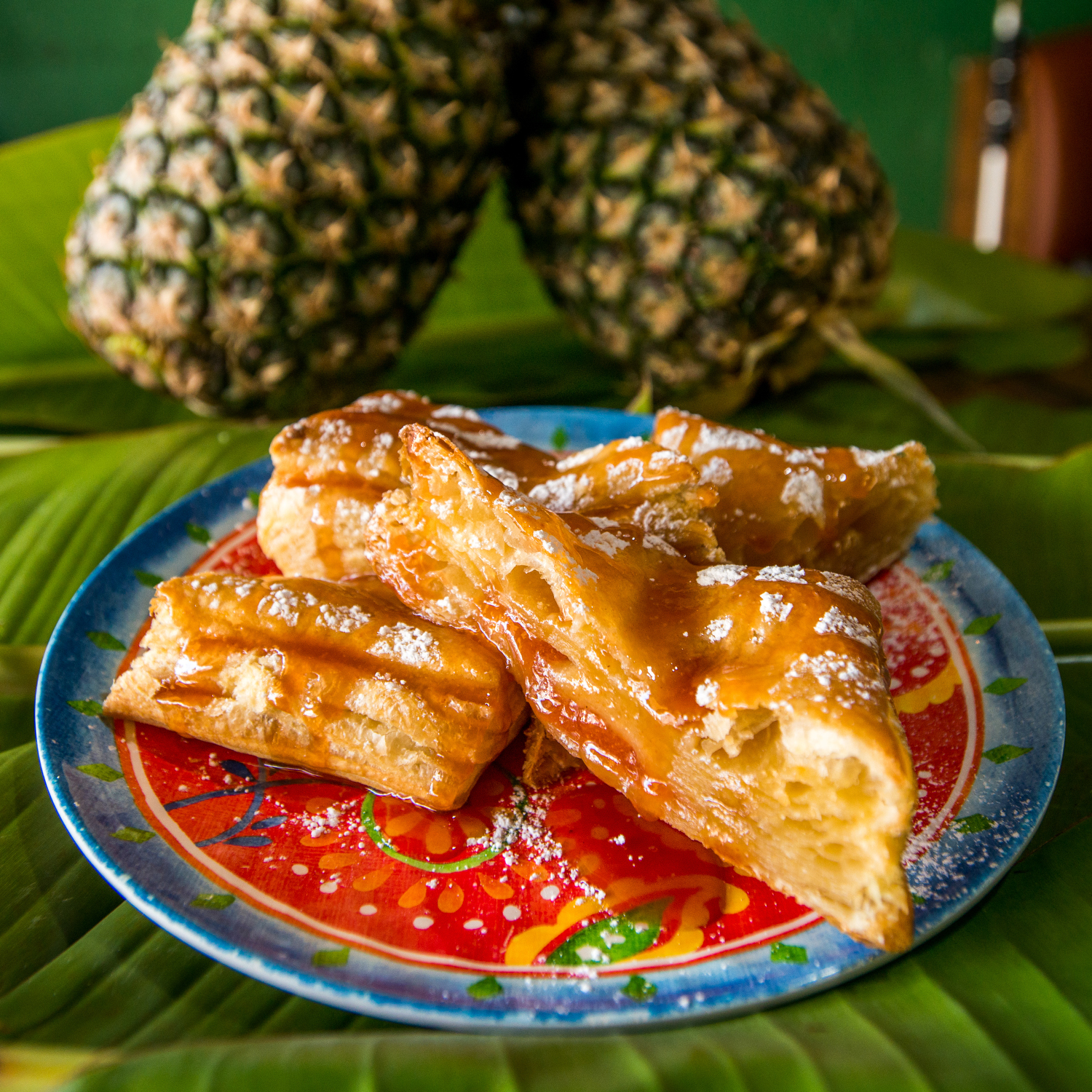
Pastelitos de Guayaba Dessert
Pastelitos de Guayaba
Guava pastries: flaky puff pastry filled with guava paste, baked until the pastry is golden and the guava is jammy. Some Cuban-American bakers add a layer of cream cheese; others run the pastry pure-guava. Both versions are common. Pastelitos are the morning pastry, the afternoon snack, and the dessert in Cuban-American culture. Every Calle Ocho bakery sells them by the dozen. They are the most distinctly Cuban-American baked good and the one most likely to show up unannounced in someone’s office on a Friday. Ball & Chain’s pastelitos de guayaba run the pure-guava preparation.
Flan
Cuban flan is the dense, caramel-topped custard found across Latin America with a Cuban refinement: more egg yolks, more condensed milk, a longer bain-marie. The result is heavier and silkier than the Spanish or Mexican versions, served chilled with the caramel pooled at the base of each slice. Cuban flan is one of those dishes that travels well. Every Cuban restaurant runs it, and the variation between kitchens is small but real.
Arroz con Leche
Cuban rice pudding, made with whole milk, condensed milk, cinnamon, and lemon peel, cooked low and slow until the rice breaks down and the pudding turns creamy. Served warm or chilled, with extra cinnamon on top.
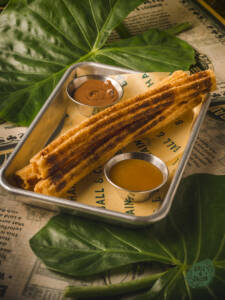 Churros
Less canonically Cuban than the others (churros came through Spanish colonial influence and remain common across Latin America), but they appear on most Cuban-American menus, often served with chocolate, dulce de leche, or salted caramel. Ball & Chain’s Churros de la Casa run cinnamon-sugar churros with Nutella and salted caramel. At a Calle Ocho restaurant, churros are the late-night pastry, the post-dinner sweet for the table that wasn’t quite ready to leave.
Cuban Cuisine in Miami: The Calle Ocho Version
Cuban food in Miami is Cuban food with sixty years of Miami specifics layered on top. The base is the canonical Cuban tradition. The variations come from what Miami is: a Caribbean and Latin American crossroads where the Cuban exile community has spent six decades adapting to the ingredients and influences of South Florida.
Three things distinguish Calle Ocho Cuban food from the canonical Havana tradition:
First, the seafood. South Florida runs fish and shellfish that Havana doesn’t. Mahi-mahi, snapper (pargo), and tropical shellfish show up on Cuban menus in Miami in ways they wouldn’t on the island. The preparations are Cuban (mojo, citrus, sofrito), but the proteins are Miami.
Second, the Caribbean and Latin American crossover. Miami’s Cuban kitchens sit alongside Dominican, Puerto Rican, Colombian, Venezuelan, Haitian, and Jamaican kitchens, and influences cross over. You’ll find jerk seasoning on Cuban menus that wouldn’t appear in Havana. You’ll find Latin tropical fruit blends in cocktails that draw from Colombia and Venezuela. The Cuban core stays Cuban, but the menu reads broader.
Third, the cocktail program got more ambitious. Cuba’s three canonical cocktails (mojito, daiquiri, Cuba Libre) anchor every Miami Cuban menu. But Miami’s bar culture has built on them: house variations like guava-cheese-pastry-flavored daiquiris (the Pastelito Daiquiri), tobacco-bittered rum Old Fashioneds (the Calle Ocho Old Fashioned), bourbon-and-cold-brew cocktails (the Cafecito Bourbon).
A serious Miami Cuban kitchen will run the canon and own the variations. The canonical preparations of ropa vieja, lechon, masitas de puerco, the Sandwich Cubano, and the Medianoche are non-negotiable. The Miami variations are how the kitchen demonstrates that it knows where it is.
Where to Eat Cuban Food in Miami
Cuban food in Miami is concentrated in Little Havana, along Calle Ocho between roughly 12th and 17th Avenues. The stretch runs Cuban bakeries (panaderías), cigar shops, coffee window-counters (ventanitas), and a half-dozen sit-down Cuban restaurants. If you want one block in Miami where Cuban food culture is most concentrated, this is it.
Ball & Chain is at 1513 SW 8th Street, in the heart of that stretch. The kitchen runs the canonical Cuban dishes (ropa vieja, masitas de puerco, vaca frita, chicken fricasee, the Sandwich Cubano, the Medianoche) alongside the Miami variations (mahi-mahi tacos, salmon, jerk-roasted wings) that a Calle Ocho kitchen should run. The bar runs the three canonical Cuban cocktails plus a deeper menu of house variations. Browse the full menu, or book a table.
Ball & Chain has been on this block since 1935. Live music runs seven nights a week with no cover charge. The food is the reason to come for dinner; the music is the reason to stay.